What Permits Are Needed for Commercial Drone Operations Over Nashville?
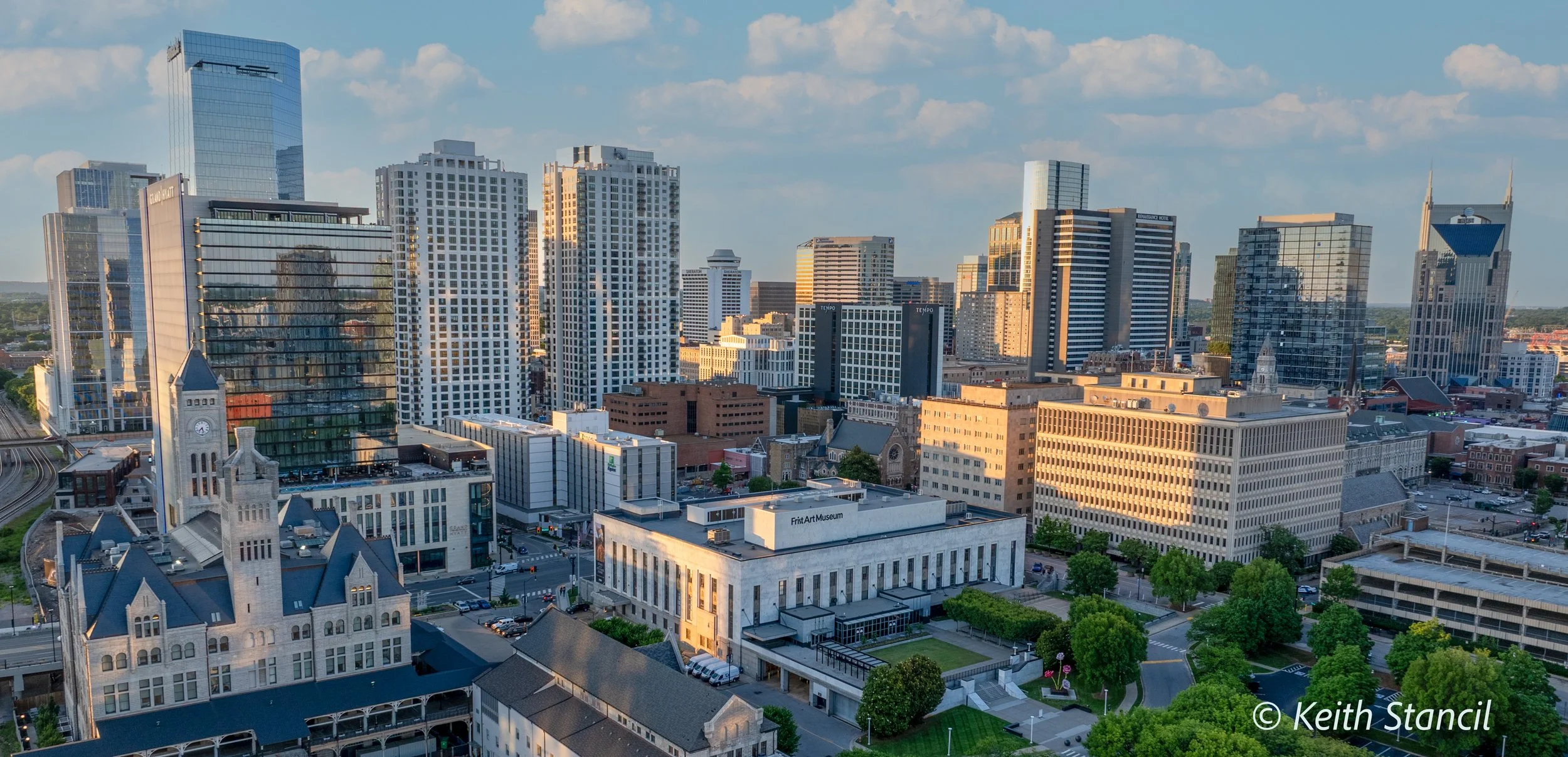
Nashville Drone Co Photo Nashville Skyline From Gulch
Commercial drone operations in Nashville continue to grow across industries including construction, tourism, real estate, live events, infrastructure inspection, marketing, and filmmaking. As drone technology becomes more common, understanding the permits and legal requirements for operating in and around Nashville is essential for staying compliant and avoiding costly penalties. Nashville presents unique challenges for drone pilots because much of downtown falls within controlled airspace tied to major airports and heavily populated areas. Operators also need to account for stadium restrictions, public parks, Temporary Flight Restrictions, and FAA operational rules.
Whether you are a production company, contractor, surveyor, or business owner planning aerial operations, this guide explains the permits and approvals commonly needed for commercial drone operations over Nashville and how experienced local operators can help navigate the process safely. Local drone expert, Nashville Drone Co, offers the following info on flying drones in the Nashville area.
FAA Part 107 Requirements for Commercial Drone Operations
Any business using a drone for commercial purposes in Nashville must comply with Federal Aviation Administration regulations under FAA Part 107.
Commercial drone use includes activities such as:
Real estate photography
Construction progress documentation
Roof inspections
Marketing videos
Mapping and surveying
Event coverage
Infrastructure inspections
Film and television production
To legally operate under Part 107, the drone pilot must:
Hold a valid FAA Remote Pilot Certificate
Register the drone with the FAA
Follow operational limitations under Part 107
Maintain visual line of sight during operations
Yield to manned aircraft
Conduct pre-flight safety inspections
The FAA Remote Pilot Certificate requires passing an aeronautical knowledge exam covering airspace, weather, regulations, and operational safety. Businesses hiring drone service providers should always verify that the pilot is Part 107 certified and properly insured before any operation begins. Local providers such as Nashville Drone Co are experienced in navigating Nashville area drone restrictions, permitting considerations, controlled airspace requirements, and operational planning for commercial projects throughout Middle Tennessee. Their familiarity with local aviation patterns, event related restrictions, and FAA authorization processes can help businesses avoid delays and maintain compliant operations from project start to finish.
Understanding Nashville Controlled Airspace
One of the most important considerations for drone operations over Nashville is airspace classification. Large portions of Nashville fall within controlled airspace because of nearby airports, especially around downtown and surrounding urban corridors. Controlled airspace requires FAA authorization before a drone can legally fly.
Seven Key Areas in Nashville Impacted By FAA Restrictions
1) Downtown Nashville
2) The Gulch
3) East Nashville
4) Northwest Nashville
5) Midtown
6) Germantown
7) Areas surrounding major stadiums and entertainment districts
The closer an operation is to airports or helicopter routes, the more likely additional approvals will be required. Commercial drone operations over downtown Nashville often involve careful flight planning due to airspace restrictions, dense pedestrian traffic, and high concentrations of buildings and infrastructure.
Airspace Authorizations and LAANC
For many commercial drone operations in Nashville, operators need FAA airspace authorization before takeoff. The FAA uses the Low Altitude Authorization and Notification Capability system, commonly called LAANC, to streamline approvals in controlled airspace. LAANC allows approved drone pilots to request near real-time authorization for operations in eligible controlled airspace zones.
Five Key Things LAANC Authorization Requests Include
1) Flight location
2) Altitude
3) Operational timeframe
4) Pilot information
5) Safety details
Some operations receive automatic approval within minutes while more complex missions may require manual FAA review. Commercial drone operations near downtown Nashville frequently require LAANC approval because of overlapping controlled airspace connected to Nashville International Airport and nearby aviation corridors. Pilots operating without required authorization risk FAA enforcement action, fines, and potential certificate suspension.
Flying Near Nashville International Airport
Operations near Nashville International Airport require additional caution because the airport creates extensive controlled airspace throughout the region. Commercial drone flights near the airport are heavily regulated to prevent conflicts with arriving and departing aircraft.
Drone operators working near Nashville International Airport often need:
LAANC authorization
Additional FAA coordination
Reduced altitude limitations
Enhanced operational planning
The closer a drone operation is to the airport, the stricter the altitude ceilings generally become. Operations along common flight paths may receive additional scrutiny from the FAA. In some locations, authorization may be denied entirely depending on operational risk. Pilots should also remain aware of nearby regional airports, heliports, and medical helicopter traffic throughout the Nashville metro area. Because aviation activity around Nashville can change rapidly, airspace checks should always occur immediately before flight operations.
Commercial Drone Operations Over Downtown Nashville
Downtown Nashville presents one of the most complex environments for commercial drone operations in Tennessee.
The area combines:
Controlled airspace
High-rise structures
Large crowds
Active roadways
Tourist traffic
Event venues
Helicopter operations
Commercial operators filming downtown skylines, Broadway entertainment areas, or construction projects must carefully evaluate operational risk and legal requirements.
In many downtown scenarios, operators may need:
FAA airspace authorization
Property owner permissions
Event coordination
Safety observers
Operational waivers depending on mission scope
Flights over people are especially sensitive under FAA regulations. Operators must ensure compliance with current FAA rules governing operations over human beings and moving vehicles. Drone pilots should also maintain awareness of signal interference risks caused by dense urban infrastructure and communication systems. Experienced commercial operators often conduct detailed site assessments before downtown flights to identify hazards, emergency landing areas, and restricted zones.
Stadium and Event Flight Restrictions
Nashville hosts major sporting events, concerts, festivals, and entertainment gatherings that can trigger additional drone restrictions.
Operations near venues such as:
Nissan Stadium
First Horizon Park
Ascend Amphitheater
Large outdoor concert venues
may be subject to Temporary Flight Restrictions, commonly known as TFRs. FAA stadium TFRs generally prohibit drone operations within a designated radius of qualifying sporting events during specified time periods.
These restrictions commonly apply to:
NFL games
NCAA football games
Major League Baseball events
NASCAR races
Large public gatherings
Violating a stadium TFR can result in serious federal penalties and enforcement action. Concerts, political events, and special security events may also generate temporary restrictions depending on federal security requirements. Commercial operators should always verify active TFRs before flight operations in Nashville event zones.
Temporary Flight Restrictions and Safety Compliance
Temporary Flight Restrictions can appear with little notice and are one of the most important compliance concerns for commercial drone operators.
TFRs may be issued for:
Major public events
VIP travel
Disaster response
Wildfire operations
Emergency incidents
Security operations
Drone pilots should check FAA notices before every operation, even when flying in familiar locations.
Safety compliance extends beyond simply obtaining authorization.
Commercial operators should also consider:
Weather conditions
Wind limitations
Battery management
Emergency procedures
Equipment inspections
Crew coordination
Pedestrian safety
Traffic management
Operations conducted recklessly or carelessly can still violate FAA rules even if proper authorization was obtained. Professional drone companies often use standardized safety protocols and risk mitigation procedures to maintain compliance during complex urban operations.
Public Property and Park Considerations
Drone operations on public property in Nashville may involve additional local considerations beyond FAA regulations. Certain parks, government facilities, and municipal properties may restrict drone launch or landing activities even if the airspace itself remains federally regulated.
Operators planning commercial drone flights in public parks or near government property should verify:
Local park rules
Property management policies
Permit requirements
Event restrictions
Privacy considerations
Some locations may prohibit takeoff and landing without prior approval from the managing authority. This distinction is important because the FAA controls navigable airspace while local entities may regulate use of the property itself. Drone filming for commercial productions on public property may also require coordination with local agencies depending on the scale of the operation.
Night Operations and Operational Limitations
Night drone operations are increasingly common in Nashville for tourism footage, event coverage, construction monitoring, and commercial media production.
FAA Part 107 permits certain nighttime operations provided operators meet current requirements.
Commercial drone pilots conducting night operations generally must:
Complete required FAA knowledge training
Use anti-collision lighting visible for required distances
Maintain operational awareness
Follow all applicable airspace restrictions
Night operations in urban environments create additional challenges including:
Reduced visibility
Increased collision risk
Lighting interference
Difficulty identifying hazards
Dense population areas
Downtown Nashville night flights may also require heightened coordination because of entertainment traffic and rooftop activity. Operators should avoid assuming that nighttime conditions reduce regulatory requirements. In many cases, operational planning becomes more demanding after dark.
Additional Considerations for Commercial Drone Projects
Commercial drone operations in Nashville can vary significantly depending on the type of project.
For example:
Construction and Infrastructure Inspections
Construction projects may require recurring flights over active job sites. Operators must coordinate around cranes, workers, and temporary structures while maintaining safe operational distances.
Film and Media Production
Professional productions often involve additional logistical coordination including street closures, crowd management, talent safety, and multiple flight locations.
Real Estate and Hospitality Marketing
Real estate drone work remains one of the most common commercial applications in Nashville. Even seemingly straightforward property shoots may involve controlled airspace or nearby restricted zones.
Surveying and Mapping
Survey grade operations frequently require precise flight paths and repeated missions. Operators must maintain consistent compliance standards across every flight.
Why Working With an Experienced Local Drone Company Matters
Navigating commercial drone regulations in Nashville requires more than simply owning a drone and holding a Part 107 certificate. Urban airspace complexity, airport proximity, event restrictions, and local operational considerations create challenges that inexperienced operators may overlook. Working with experienced local providers such as Nashville Drone Co can help businesses reduce risk and maintain compliance throughout the planning and execution process.
Experienced Nashville-area drone companies often provide:
FAA-compliant operations
Airspace authorization management
LAANC coordination
Site safety assessments
Risk mitigation planning
Downtown operational experience
Knowledge of local flight considerations
Insurance coverage
Professional production standards
Local operational knowledge is particularly valuable when working near downtown Nashville, controlled airspace, public venues, or sensitive locations. Experienced operators understand how Nashville’s aviation environment, event schedules, and urban infrastructure can impact drone missions. Professional drone providers can also help clients determine whether additional approvals, waivers, or property permissions may be needed before operations begin.
Final Thoughts
Commercial drone operations over Nashville involve multiple layers of regulatory compliance and operational planning.
Depending on the project location and mission type, operators may need:
LAANC airspace authorization
FAA waivers
Property permissions
Event coordination
TFR compliance
Downtown Nashville and areas surrounding Nashville International Airport require especially careful planning because of controlled airspace and dense urban activity. Commercial operators should always prioritize safety, regulatory compliance, and proper operational procedures before conducting flights in the Nashville area. As drone usage continues to expand across construction, media, tourism, and infrastructure industries, working with experienced local professionals can help businesses complete projects efficiently while staying aligned with FAA requirements and Nashville-area operational guidelines.
Contact Nashville Drone Co to schedule your next aerial photography or drone video project to guarantee the required permits and safety are in place. info@nashvilledrone.co