Best Rated Camera Drones in 2026, Ranked by a Nashville Drone Company
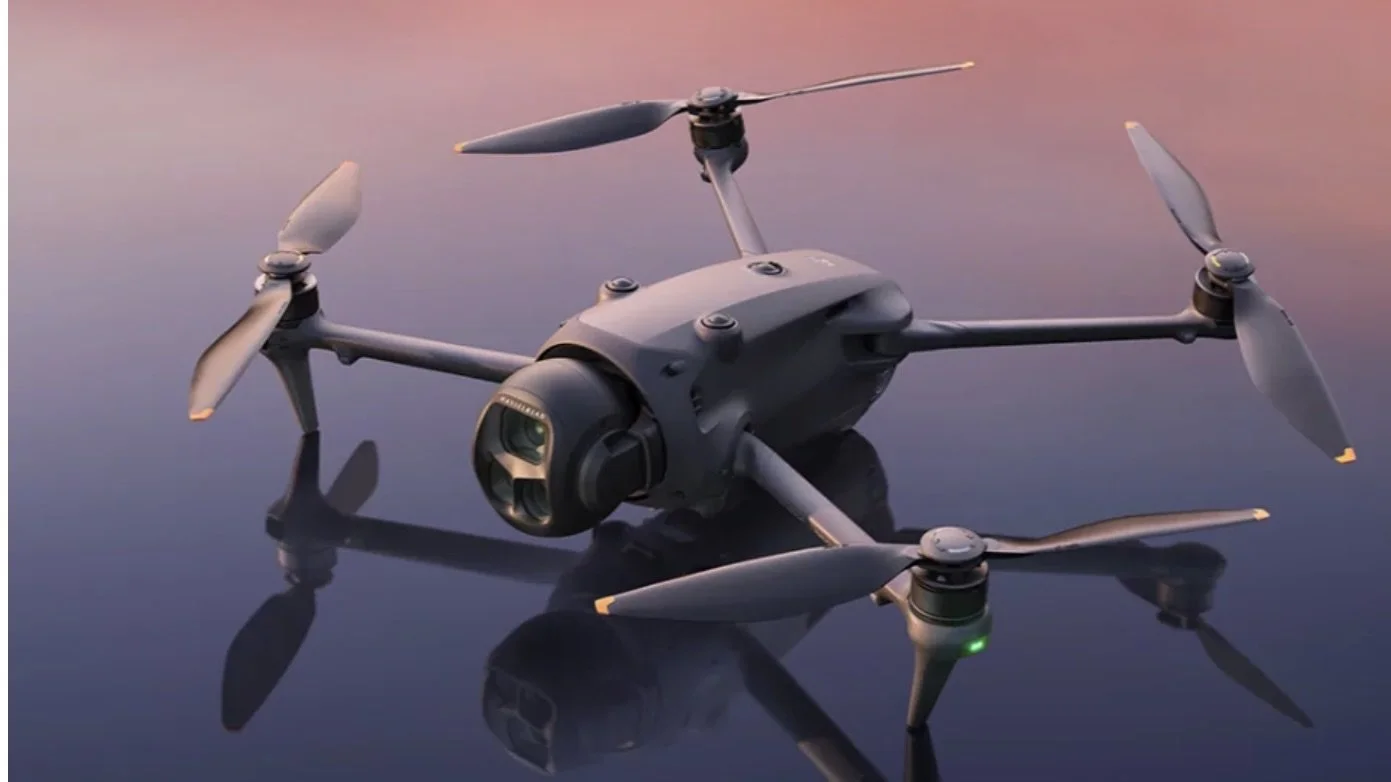
Spec sheets make every drone sound impressive. Paid shoots sort them out quickly. Nashville Drone Co flies commercial work across Middle Tennessee, including film, music videos, marketing video and construction progress programs on downtown high-rises, so the drones we use every week and the ones that stay in the case tell us a lot. This ranking blends two sources: what independent review outlets found in testing, and what our team at Nashville Drone Co has learned flying these aircraft on real jobs. When a claim comes from a reviewer, we name the outlet. When it comes from our own work, we say so.
Here is how each drone ranks, with our rating beside it.
| Rank | Drone | Nashville Drone Co Rating | Best For |
|---|---|---|---|
| 1 | DJI Mavic 4 Pro | 9.7/10 | Stills, 6K video, 360 panoramas |
| 2 | DJI Mavic 3 Pro | 9.5/10 | Film, broadcast, construction |
| 3 | DJI Mini 5 Pro | 7.5/10 | Travel, calm-weather shoots |
| 4 | DJI Avata 2 | 6.5/10 | FPV motion shots |
| Hall of Fame | DJI Mavic Air 2 | Not scored | The drone that started it all |
1. DJI Mavic 4 Pro: Top Rating (9.7/10)
The Mavic 4 Pro takes the top spot on our list and on the review sites we checked. Tom's Guide gave it five-star performance marks and named it the best consumer drone you can buy, citing 100MP Hasselblad stills and smooth 6K and 4K video at 60 frames per second. TechRadar also awarded it Editor's Choice, and Fstoppers scored it 26 out of 30 (87 percent) after real-world photography tests, while noting it will not replace a medium format camera.
A few details are worth knowing before you buy. Pix-Pro points out that the 100MP main sensor uses a Quad Bayer layout, so its native resolution is closer to 25MP, with the full 100MP mode built from that. The three lenses cover 28mm, 70mm and 168mm, and DroneXL's long-term review singled out the two telephoto options as the reason it keeps choosing this drone. The gimbal also rotates a full 440 degrees, according to DroneXL's hands-on testing.
In our hands, the 100MP files give us generous cropping room, and the 360 degree panoramas are excellent. We rely on them for construction progress documentation, where one panorama can show an entire site. The tradeoff is size. TechRadar noted the aircraft weighs just over one kilogram, so this is not a jacket pocket drone.
2. DJI Mavic 3 Pro: Close Second (9.5/10)
The Mavic 3 Pro has been the workhorse at Nashville Drone Co. It has flown on film projects, music videos, marketing videos and construction progress programs. It captured the Billion Dollar Photo used in marketing for Paramount Tower, and it was the drone used in a live broadcast of the Leagues Cup Final.
Reviewers back up that reputation. TechRadar gave it Editor's Choice and called it the most versatile Mavic to date, pairing a 20MP Four Thirds main camera with 70mm and 166mm telephoto cameras. Video goes up to 5.1K at 200Mbps, with Apple ProRes options for professional workflows. Amateur Photographer added a practical note: the two telephoto cameras have fixed apertures, which makes ND filters essential for video.
So why second? The Mavic 4 Pro offers more resolution and 6K video. The Mavic 3 Pro offers something a spec sheet cannot show, which is a long record of getting the shot on deadline. When a broadcast or a client launch depends on one flight, that history counts.
3. DJI Mini 5 Pro: Great Camera, Wind Limits (7.5/10)
On camera quality alone, the Mini 5 Pro would rank higher. Fstoppers highlights a 50MP, 1-inch sensor in a sub 250 gram body, plus 4K video at up to 120 frames per second. That is a remarkable amount of imaging for a drone this small.
Wind is where it falls short for our work. DJI rates it for winds up to 12 meters per second, roughly 27 miles per hour, and Tom's Guide reported it stayed steady in 21 mph wind. Fstoppers, though, observed that it still wobbles in strong wind, which is expected for an aircraft this light. Our standard is stricter than a casual flight. In winds over 15 mph, the Mini 5 Pro does not give us footage we are comfortable delivering to a paying client, and wind is usually stronger at the heights we fly for building projects. For travel and calm days it is a great choice. For client work in Tennessee weather, it stays a second aircraft.
4. DJI Avata 2: Fun FPV, Post-Heavy Footage (6.5/10)
The Avata 2 is a fun FPV drone. According to The Drone Girl, it carries a 1/1.3-inch, 12MP camera behind a 155 degree ultra-wide lens, shooting 4K at 60 frames per second, and the 10-bit D-Log M color mode gives editors room to work.
The camera is not its strength, though. TechGearLab points out that it uses a single-axis gimbal, so stabilization trails drones with three-axis gimbals. In our experience, the footage needs heavy lifting in post editing before it looks great. Where the Avata 2 earns its place is in immersive moves through tight spaces that a Mavic cannot attempt. Budget extra editing time every time it flies.
Hall of Fame: DJI Mavic Air 2
Every company has an origin story, and ours starts with the Mavic Air 2. When it launched in April 2020, PetaPixel described a 48MP half-inch Quad Bayer sensor, 4K video at 60 frames per second and a 34 minute battery in a 570 gram airframe. CineD noted it was the first Mavic to record 4K at 60 frames per second at 120Mbps, beating the pricier Mavic 2 Pro on that spec.
That was enough to start a business on. The Air 2 flew on the Wynonna Judd film Between Hell and Hallelujah and on multiple major label music videos, and it got Nashville Drone Co off the ground. It is a good reminder that a capable camera in the hands of a prepared pilot goes a long way.
How to Choose the Right Camera Drone
Start with the work, not the ranking. Four questions narrow the field quickly.
1) What does the deliverable need?
Large-sensor drones like the Mavic 4 Pro and Mavic 3 Pro hold detail in bright skies and deep shadows, which matters for marketing video and architecture. Smaller sensors can handle social content.
2) What wind will you fly in?
Lighter aircraft get pushed around first. If you regularly fly above 15 mph, weight matters as much as camera specs.
3) How much editing time do you have?
A drone with a superb camera saves hours downstream. A weaker camera moves that cost into post production.
4) How portable does it need to be?
The Mini 5 Pro weighs under 250 grams and travels easily. The Mavic 4 Pro is a larger aircraft that needs more room.
Buying a DJI Camera Drone in the US
Availability changed in December 2025, when the FCC updated its Covered List to include foreign-produced drones. UAV Coach reports that the update names DJI and Autel among others. According to the FCC's fact sheet, the decision does not affect drones people already own, and retailers can keep selling models approved earlier, because the restrictions apply to new device models. UAV Coach adds that no grounding order or remote disablement has been placed on drones already in use. Rules and stock can shift, so confirm current availability with an authorized retailer before you buy.
Frequently Asked Questions
What is the best rated camera drone right now?
Among the drones covered here, the DJI Mavic 4 Pro holds the top spot, supported by Editor's Choice awards from TechRadar and Tom's Guide and by our own 9.7 out of 10 rating.
Is the Mavic 3 Pro still worth buying?
For teams that value a proven record, yes. It earned Editor's Choice from TechRadar and remains a dependable tool for film, marketing and construction work. If you need 100MP stills or 6K video, step up to the Mavic 4 Pro.
Do I need a license to fly a drone commercially?
In the United States, yes. Commercial pilots need an FAA Part 107 remote pilot certificate. Keith Stancil, founder of Nashville Drone Co, holds one.
The Bottom Line
If you want the strongest single camera drone on this list, choose the Mavic 4 Pro. If you want a proven production aircraft with a record behind it, the Mavic 3 Pro is nearly as good and has earned its place in our case. Choose the Mini 5 Pro for travel and calm days, the Avata 2 for FPV motion, and remember that no camera makes up for a pilot who plans the shot, checks the wind and knows the airspace.
Work With Nashville Drone Co
Nashville Drone Co provides drone photography and video across Middle Tennessee. Founded by Keith Stancil, an FAA Part 107 certified pilot with over two decades of professional entertainment marketing experience, the company covers everything from construction progress programs to music videos. Planning a shoot? Reach out via our contact page and tell us what you need to capture.
Sources
Tom's Guide, DJI Mavic 4 Pro review: https://www.tomsguide.com/cameras-photography/drones/dji-mavic-4-pro-review
TechRadar, DJI Mavic 4 Pro review: https://www.techradar.com/cameras/drones/dji-mavic-pro-4-review
Fstoppers, Mavic 4 Pro review: https://fstoppers.com/reviews/dji-mavic-4-pro-review-best-drone-photographers-711582
Pix-Pro, Mavic 4 Pro review: https://www.pix-pro.com/blog/mavic-4-pro-review
DroneXL, Mavic 4 Pro test results: https://dronexl.co/2025/05/13/dji-mavic-4-pro-review-test-results/
DroneXL, Mavic 4 Pro long-term review: https://dronexl.co/2026/02/05/dji-mavic-4-pro-drone-long-term-review/
TechRadar, DJI Mavic 3 Pro review: https://www.techradar.com/reviews/dji-mavic-3-pro-review
Amateur Photographer, DJI Mavic 3 Pro review: https://amateurphotographer.com/review/dji-mavic-3-pro-review/
Fstoppers, DJI Mini 5 Pro review: https://fstoppers.com/reviews/review-dji-mini-5-pro-drone-redefines-mini-standard-714487
Tom's Guide, Mini 5 Pro vs Mini 4 Pro: https://www.tomsguide.com/cameras-photography/drones/dji-mini-5-pro-vs-dji-mini-4-pro-clear-winner
The Drone Girl, Avata 2 review: https://www.thedronegirl.com/2024/04/11/avata-2-review/
TechGearLab, DJI Avata 2 review: https://www.techgearlab.com/reviews/cool-gadgets/drones/dji-avata-2
PetaPixel, Mavic Air 2 announcement: https://petapixel.com/2020/04/27/dji-unveils-the-mavic-air-2-with-48mp-sensor-4k-60p-video-and-34-minute-battery/
CineD, Mavic Air 2 review: https://www.cined.com/dji-mavic-air-2-review-first-look-4k-60p-1080p-240fps/
FCC fact sheet on the Covered List update: https://docs.fcc.gov/public/attachments/DOC-416839A1.pdf
UAV Coach, DJI ban explainer: https://uavcoach.com/dji-ban/