Every Friday Night, Nashville High Schools Are Rolling the Dice on an FAA Violation
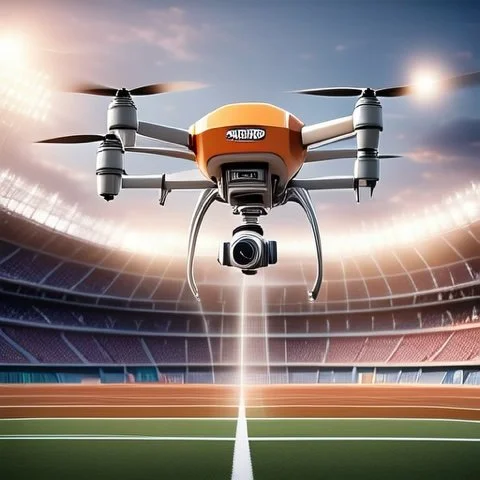
Walk into any Nashville area high school football stadium on a Friday night this fall and look up. There is a good chance you will spot a small drone hovering somewhere between the press box and the fifty yard line, quietly filming both sidelines for coaching film. It has become as normal a part of high school football as chain gangs and concession stand nachos. Coaches love the footage. Coordinators use it to break down formations the next morning. Parents film it for their own highlight reels. What almost nobody in the stands realizes is that most of those drones are being flown illegally, and the schools hosting them are the ones left holding the liability.
After sitting through dozens of games at Franklin High School and Summit High School, located in Williamson County TN, I have yet to see a single drone operation that would hold up to an actual FAA compliance check. Both teams at each game typically have an aircraft in the air, and neither one is flying legally. That is not a knock on the pilots personally. Most of them are well meaning parents, booster club volunteers, students or local videographers who genuinely have no idea how many separate FAA rules they are breaking in a single flight. But ignorance of the regulation does not make the flight legal, and it does not make the school any less exposed if something goes wrong.
Filming for a Team Is Commercial Flying, Full Stop
The first misconception trips up almost everyone who picks up a drone for a football game. People assume that because they are not charging or running a business, they are flying recreationally. They are not. The moment footage is captured in connection with a school program, a booster club, or any kind of business purpose, including simply providing film to coaches for free as a favor, the FAA classifies that as commercial operation. Commercial operation requires the pilot to hold a Part 107 Remote Pilot Certificate. That is not a technicality. It is the entire foundation the rest of the FAA's operating rules are built on. A pilot without a Part 107 certificate flying over a football field is not just missing a piece of paper. They have skipped the aeronautical knowledge test that covers airspace, weather, loading, emergency procedures, and the very over-people rules discussed below. Most parents filming their kid's games on a $500 drone from Costco have never even heard of Part 107.
The Over People Rule Almost Nobody Understands Correctly
This is where things get genuinely complicated, and where even well intentioned pilots get it wrong in both directions. The FAA's current rule for flying over crowds, known as Operations Over People, sorts every drone into one of four categories based on weight and injury risk. Category 1 covers any aircraft that weighs 0.55 pounds or less at takeoff, counting the battery, the SD card, propeller guards, strobe light and literally everything else attached to the airframe, with no exposed rotating parts capable of cutting skin. A drone that qualifies for Category 1 is allowed to fly sustained flight directly over a packed grandstand and a field full of players, without a waiver, without special paperwork, as long as the pilot still holds Part 107. That threshold is exactly why DJI built the Mini line the way it did. The Mini 3, Mini 4 Pro, Mini 5 Pro and similar models sit right around 249 grams, a hair under the 0.55 pound cutoff, specifically to slide into Category 1. On paper, that means a stock DJI Mini flown by a certificated pilot could legally hover over the student section during a game. But here is where nearly every game day pilot loses the exemption without realizing it, and where the night game timing makes things worse. Staying under Category 1 means the drone has to weigh 0.55 pounds or less with absolutely everything attached, including propeller guards and the anti-collision strobe required for night flight, discussed below. A stock DJI Mini already sits right at that 249 gram line before anything else is added. Attach the required FAA propeller guard for flying over people and a night strobe bright enough to satisfy the FAA, and every single DJI Mini on the market goes over the limit. Once that happens, the aircraft drops into Category 2 or 3, and those categories require the manufacturer to have an accepted Declaration of Compliance on file with the FAA proving the aircraft meets specific injury thresholds. No consumer or prosumer drone sold in the United States currently has one. That means the only legal path left to fly a guarded, lit DJI Mini over that crowd is an actual 107.39 waiver, which almost none of the pilots showing up on Friday nights have.
The one DJI airframe that actually has enough weight margin to carry a propeller guard, a compliant strobe, and stay under 0.55 pounds is the DJI Neo, which starts at roughly 135 grams bare. But the Neo does not include built in FAA required Remote ID broadcast, so a pilot flying it commercially under Part 107 still has to attach an external Remote ID module, eating back into that margin. The Neo is also not known for handling low light conditions well, which matters a great deal at a drone flying over a stadium after sundown. In practice, that means a fully compliant, Category 1 legal setup for a night football game is narrow, deliberate, and rare. Nearly every drone showing up at high school football games on a Friday night in Williamson County is either an unmodified aircraft missing required night lighting, or a guarded and lit aircraft that has quietly slipped into a category it has no waiver for.
Night Flights Need a Strobe Visible for Three Statute Miles
Nearly every high school football game in Middle Tennessee kicks off after the sun goes down, or runs well past the end of civil twilight. FAA night operation rules require an anti-collision light that flashes and remains visible for three statute miles, along with pilot training specific to night flight. Every drone I have watched at Franklin and Summit high school are running factory lights barely visible from the sideline, let alone three miles out, and as explained above, adding a strobe bright enough to actually comply often pushes the aircraft out of its legal weight class in the first place. It is a genuinely difficult needle to thread, and almost nobody flying game footage right now has threaded it.
Remote ID Is Not Optional Anymore
Since 2024, virtually every drone flown under Part 107 has been required to broadcast Remote ID, essentially a digital license plate that lets the FAA and law enforcement identify the aircraft and its control station in real time. It is one more compliance layer that most weekend warrior operators either do not know exists or have never bothered to configure correctly.
Why This Becomes the School's Problem, Not Just the Pilot's
The FAA can fine an unlicensed pilot directly, and those fines can be large ($10K-$15K) and real. But schools should be far more worried about what happens in a civil courtroom than what happens in a federal enforcement fine. If a drone drops out of the sky over a student section, and it will eventually happen somewhere, the injured party's attorney is not going to stop at suing the pilot. They are going to name the school, the county school system and the athletic department for knowingly allowing an unlicensed, non-compliant aircraft to operate over spectators and players at a school sanctioned event. This is where general liability coverage typically fails everyone involved. Most standard event or facility insurance policies exclude aviation incidents outright, and virtually all of them exclude illegal operations specifically. A policy that would otherwise respond to a spectator injury can be voided the moment it comes out that the drone was flown without a Part 107 certificate, without a required waiver, or without proper lighting. Schools that allow drone filming at games without confirming coverage are effectively self insuring an aviation risk they never agreed to take on, and most athletic directors have no idea that is the arrangement they are in.
Are Nashville area schools aware of any of this? Based on what shows up at the games every week, the honest answer appears to be no. Nobody is asking pilots for a Part 107 certificate number before they launch. Nobody is asking whether the aircraft configuration still qualifies for Category 1, whether a waiver is on file, or whether the vendor carries drone specific liability coverage naming the school as an additional insured. It is treated the same as any parent with a camera, when it is legally closer to hiring an unlicensed contractor to operate a small aircraft over a crowd of minors.
What Legitimate Operators Have at Stake
There is a broader cost here that has nothing to do with any single school or stadium. Every time an unlicensed drone clips a light pole or drops into a crowd at a community event, it becomes a headline that shapes how the public and regulators view commercial drone work as a whole. Nashville Drone Co, like every operator that has invested in Part 107 certification, weight compliant configurations, proper night lighting, Remote ID compliance, and drone specific insurance, has a direct stake in how this plays out. The entire industry gets painted with the same brush when a hobbyist drone falls out of the sky at a football game, and that kind of incident is exactly the sort of thing that tends to invite tighter regulation, more restrictive local ordinances, and a harder path for everyone flying legally. What looks like a harmless parent volunteering to film Friday night games is, from a regulatory standpoint, an accident waiting to set back an entire industry that has spent years building credibility with the FAA and the public.
Athletic directors and booster clubs do not need a law degree to close most of this gap. Before letting any drone fly over a football field with players on it, ask the pilot for proof of the aircraft's total flying weight with the propeller guard and the anti-collision strobe actually attached, and confirm that weight is under 0.55 pounds. As of now, no DJI Mini model can carry both and stay under that line, so a Mini showing up with propeller guards and properly lit for a night game is already outside Category 1 and needs a waiver on file to be legal. The only DJI drone that realistically holds that weight with propellers guards and a strobe attached is the DJI Neo, and even that requires an external Remote ID module and has known limitations flying in low light, which is worth asking about directly for a night game. Anything short of clear, verifiable answers on weight, waiver status, and Remote ID means the drone in the air is very likely violating multiple FAA rules at once, with the school left to explain why it allowed that over a stadium full of students.
Nashville Drone Co is a commercial drone services company serving the Nashville area. info@nashvilledrone.co