Construction Progress Drone Video: Why Weekly Documentation Beats a One Time Shoot
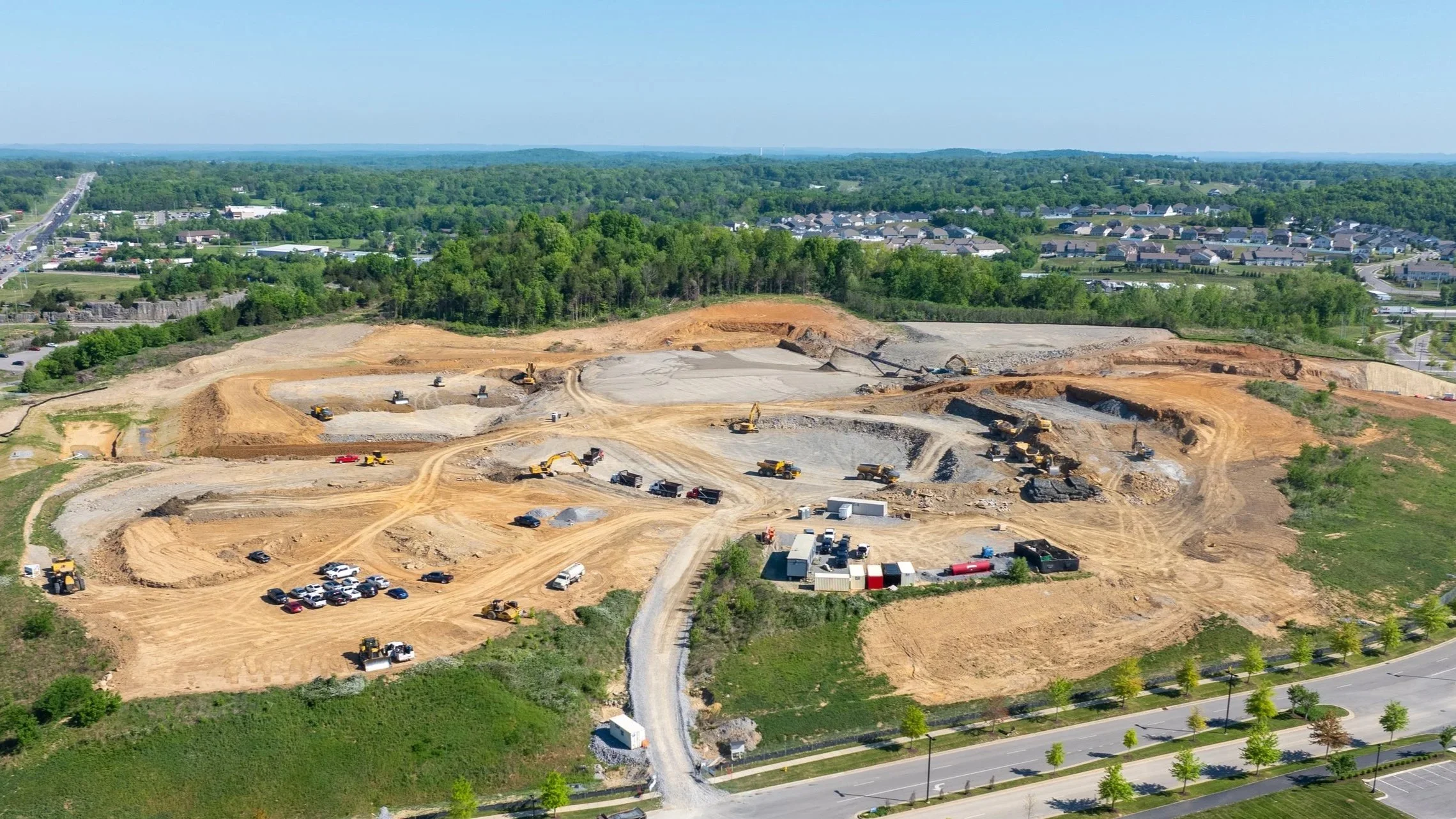
Most people think of drone video on a construction site as a single event, you book a flight, get some impressive footage of the building going up, and move on. That works fine for a quick marketing clip. It does not work if you are actually trying to track a project. Real construction progress documentation looks more like a habit than an event, and that distinction is exactly what we have built with McCrory Construction on their Walmart development project. See more on a case study HERE.
The difference between the two approaches is not subtle once you see it laid out. A one time shoot answers the question "what does this project look like right now." A recurring documentation program answers a much more useful question: "how is this project actually moving, week over week, and where might it be falling behind." For a construction company managing a long timeline commercial build, that second question matters far more than the first.
A Real Example: Weekly Drone Documentation for McCrory Construction
Nashville Drone Co partnered with McCrory Construction to provide recurring drone video documentation throughout an entire Walmart development project. Rather than a one off shoot, the engagement was built around weekly aerial progress videos, giving stakeholders a way to monitor construction activity and track milestones from groundbreaking all the way through completion, without needing to physically visit the site. This was a commercial construction project of real scale, the kind where owners, project managers, and other stakeholders are spread across multiple locations and cannot simply walk the site whenever they want an update. The solution needed to do several things at once: document construction activity on a consistent weekly basis, capture project milestones as they actually happened rather than after the fact, give remote stakeholders genuine visibility into the build, and leave behind a visual archive of the entire construction process once the project closed out.
The Problem Recurring Documentation Actually Solves
Large commercial construction projects involve a lot of people who are not standing on the site every day, owners, project managers, and other stakeholders, all of whom still need a clear, current picture of where things stand. The construction team needed a reliable way to visually track progress throughout the build without relying on frequent site visits. A single drone shoot near the end of a project tells you almost nothing about how the work actually progressed to get there, and a written status report, however detailed, still asks the reader to imagine what the site actually looks like.
Establishing a Consistent Flight Schedule
We approached this by setting up a recurring flight schedule rather than a one time booking, using consistent flight paths and camera perspectives on every visit. That consistency matters more than it might seem. When every week's footage is captured from roughly the same angles and altitude, stakeholders can directly compare one week's progress to the next, almost like flipping through a flipbook of the entire project. Over the life of the build, those weekly flights documented site preparation and grading, utility installation, foundation work, structural development, parking lot construction, exterior improvements, and final site completion.
Why Weekly Video Outperforms a Single Progress Shoot
A single drone flight midway through a project gives you one data point. A weekly cadence gives you a timeline, and a timeline is what actually makes aerial documentation useful for reporting and decision-making rather than just a nice visual.
It Becomes a Real Reporting Tool
The weekly videos for this project were not just kept as marketing assets sitting in a folder. They functioned as an actual reporting tool throughout construction, something the project team could reference to verify progress, track milestones, and communicate status without needing a written report to do all the work. Seeing a foundation poured, then framed, then enclosed, week by week, communicates progress in a way a status update never quite manages. For project managers fielding questions from owners or investors, having a current, dated video on hand is a far faster and more convincing answer than describing the site verbally.
It Creates an Archive Worth Having Later
Every individual weekly flight is useful in the moment, but the real long term value shows up once the project wraps. At that point, a construction company is sitting on a complete visual archive of the entire build, something that can be referenced, repurposed, or simply pointed to as proof of experience on the next bid. Few things demonstrate genuine capability to a future client more convincingly than a real, week-by-week record of a comparable project from groundbreaking to grand opening.
Beyond Weekly Updates: Marketing Video and Remote Site Access
The recurring progress videos were only one piece of what this project actually needed. Two other deliverables filled in gaps that weekly updates alone could not cover.
Quarterly Marketing Videos With a Different Purpose
Alongside the weekly technical documentation, we produced quarterly marketing videos built around storytelling rather than verification, highlighting major milestones and the overall transformation of the site for use in social media, business development presentations, and recruiting or company culture content. Where the weekly videos exist to answer "where do things stand," the quarterly videos exist to answer "look what we are capable of building," and trying to make one video serve both purposes usually waters down both. A weekly update needs to be quick, consistent, and useful for comparison. A marketing video needs pacing, music, and a sense of scale that earns attention on social media. Treating them as two distinct deliverables, rather than trying to stretch one video to do both jobs, is part of why this approach works as well as it does.
A 360° Panorama for Teams Who Cannot Visit the Site
For team members based outside the region, we also created a high resolution 360° panoramic image of the site. Rather than a static photo, this gave remote stakeholders something they could actually pan and zoom through, reviewing site conditions and getting a real sense of project status without needing to travel. For a project with stakeholders scattered across different locations, that single panoramic image functioned as a virtual site visit on demand, letting someone explore the actual current layout of the site at their own pace rather than relying on someone else's verbal description of it.
How a Recurring Documentation Program Actually Gets Scheduled
A program like this only works if the logistics behind it are reliable. Construction sites do not pause for a film crew, and a documentation schedule that gets skipped or rearranged every few weeks loses most of its value, since the whole point is consistency over time.
Building the Schedule Around the Project
Setting up weekly flights means coordinating with the site superintendent's schedule, working around active equipment and crew locations, and picking a consistent time of day that keeps lighting reasonably similar from one visit to the next. None of that happens by accident. It takes a flight plan that gets reused and refined as the project moves through different phases, since a flight path that works well for documenting site grading is not necessarily the same one that best captures structural framing once the building starts going vertical.
Keeping the Footage Comparable Week to Week
The value of weekly documentation comes almost entirely from comparability. A spectacular single shot is worth little if it cannot be lined up against the shot from the week before and the week after. That is why this kind of program leans on repeatable flight paths and consistent camera angles rather than a different creative approach every visit. The goal is to make the entire sequence, viewed together, tell an accurate and easy to follow story of the build.
Why This Matters Beyond One Project
McCrory Construction's Walmart development is one example, but the underlying need is common across commercial construction generally. Any project with a long enough timeline and a stakeholder group spread across more than one location runs into the same basic problem: how do you keep everyone informed without burning time on site visits or relying on someone's written description of what changed.
A Model That Scales to Different Project Sizes
The same structure, weekly or biweekly progress video, periodic marketing-focused edits, and a remote access panoramic option, scales reasonably well across different project types. A large retail development like this one might justify a full weekly cadence. A mid-size commercial buildout might do well with a biweekly schedule and quarterly marketing videos. A multi-phase residential community might benefit most from monthly visits tied to specific phase completions. The right cadence depends on the project's timeline and how many people genuinely need to stay current on its progress.
Documentation That Pays for Itself Twice
Part of what makes this kind of program a reasonable investment, rather than an added cost layered on top of an already expensive project, is that the same flights serve two purposes at once. The weekly video that exists to verify progress for a project manager this month is the same raw footage that becomes part of a marketing reel next year. Few services offer that kind of dual return on a single recurring expense.
What This Approach Delivers for a Construction Company
Combining weekly progress video, quarterly marketing content, and remote access panoramic imagery gave McCrory Construction something more useful than any single deliverable could provide on its own: a documentation system that served operations and promotion at the same time. The weekly videos supported progress verification, stakeholder reporting, and milestone tracking. The quarterly videos and photography built a marketing library the company can use for years after the project closes. And the panoramic imagery solved the very specific problem of keeping remote stakeholders genuinely informed rather than just occasionally updated.
What stands out about this kind of program, compared to a single shoot booked once near project completion, is how naturally it generates content the company did not have to plan for separately. A construction firm that books one drone visit gets one deliverable. A construction firm that books a recurring schedule ends up, almost as a byproduct, with a deep library of footage spanning the entire life of the project, material that can be cut into a highlight reel, pulled for a specific milestone announcement, or used years later when a similar project comes up in a sales conversation.
Is Weekly Drone Documentation Right for Your Project?
For a large commercial or residential development running over many months, with stakeholders who are not on site daily and decisions that depend on knowing exactly where the project stands, recurring weekly documentation tends to earn its cost many times over, both as a working management tool during construction and as a body of marketing content once the project is finished.
The right cadence really comes down to two questions: how long is the project running, and how many people need to stay informed without physically being there. A multi month commercial or residential development with stakeholders in different cities will benefit greatly from weekly updates. Shorter construction renovation projects also benefit from weekly shoots when used for a time lapse marketing video.
If your company has a project that would benefit from this kind of ongoing visual record, from groundbreaking through completion, contact Nashville Drone Co to talk through a recurring documentation schedule built around your timeline. info@nashvilledrone.co