Comments of Nashville Drone Co Regarding Securing the U.S. Drone Supply Chain FCC Docket No. 26-189
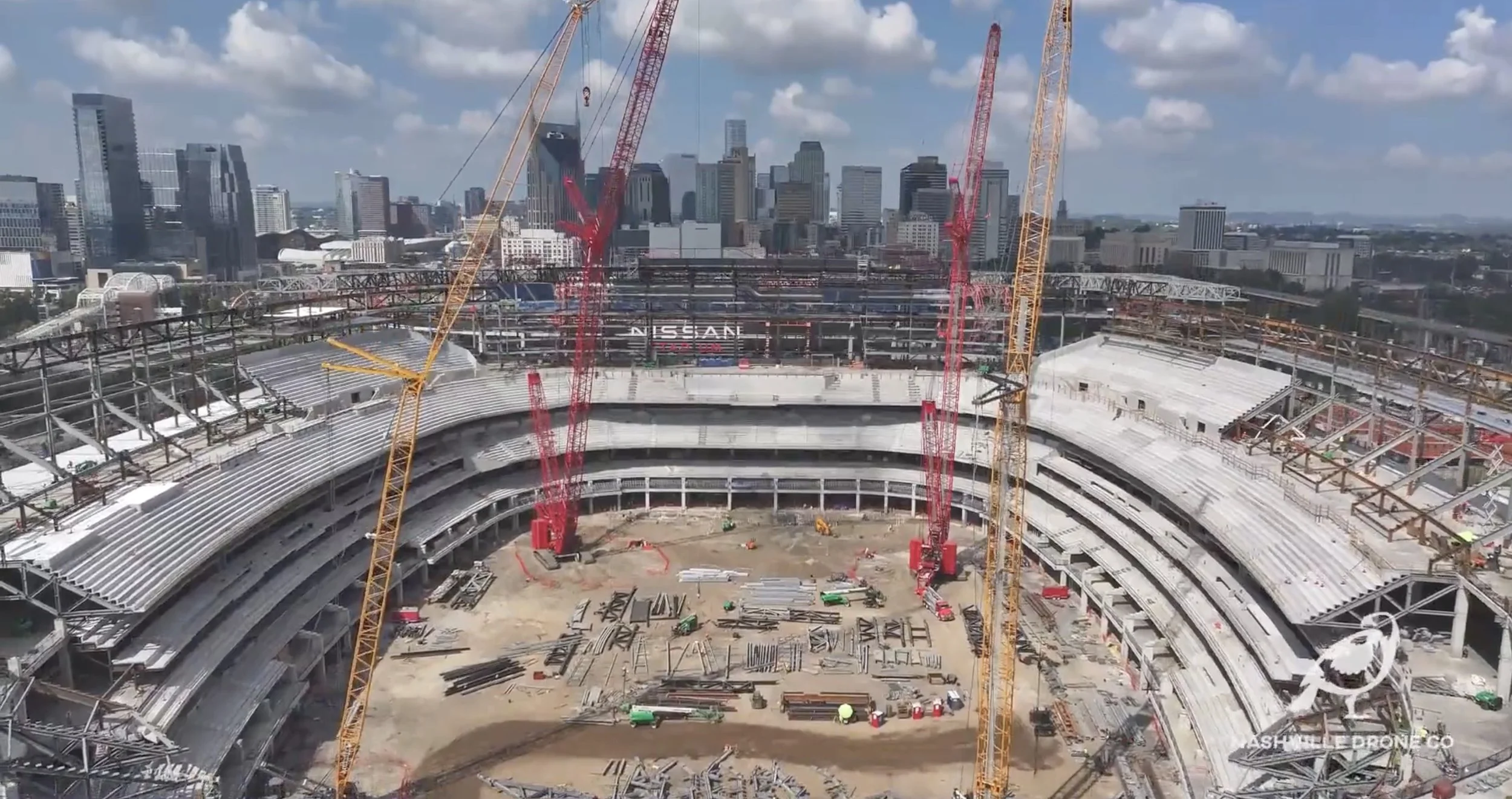
Nashville Drone Co Nissan Stadium Construction Photo
To the Federal Communications Commission:
My name is Keith Stancil, and I am the founder and president of Nashville Drone Co, a commercial drone operation based in Middle Tennessee. We serve land developers, general contractors, engineers, and commercial builders across the Nashville region, providing aerial photography, video, mapping, and progress documentation for projects ranging from single family developments to high rise towers in downtown Nashville. I appreciate the opportunity to submit these comments on the Commission's efforts to secure the domestic drone supply chain.
I want to be direct about where I stand. I support keeping foreign adversaries away from American infrastructure data, communications systems, and operational information. That is not a controversial position in this industry. What concerns me is the possibility that a well intentioned security rule gets written broadly enough that it sweeps up the everyday tools small commercial operators like mine depend on to do our jobs safely and well. I am writing to offer the perspective of someone flying drones over active construction sites every week, not from a policy office, but from the field.
Why Safety Has to Come First in Any Conversation About Sensors
Before I get into supply chain specifics, I want to explain how my company actually operates, because it shapes everything I am about to say. Our number one goal on every job site is flying safely. We are not just capturing pretty photos of a skyline. We are flying near cranes, near workers, near partially completed structures, and near other aircraft in increasingly crowded urban airspace. Safety is not a marketing line for us. It is the standard every flight gets held to before a single photo is ever taken.
LiDAR sensors are a meaningful part of how we accomplish that. On a construction site, conditions change daily. A crane arm swings into a new position, scaffolding goes up overnight, new equipment gets staged in a spot that was clear the week before. LiDAR gives our pilots real time terrain and obstacle awareness that a camera alone cannot provide, which means fewer close calls and safer flights around the exact kind of dynamic, hazardous environment a construction site represents. When I hear proposals that could restrict access to LiDAR sensors because the same underlying technology has military applications, my first concern is not inconvenience. It is that removing or pricing out this equipment makes flights over active job sites less safe for our pilots and everyone working below us.
I would ask the Commission to keep that distinction in mind throughout this process. A LiDAR sensor helping a drone avoid a crane cable is not the same national security question as a sensor collecting data for a foreign government. Those two things should not be regulated as though they are identical simply because they share a name.
What Our Work Actually Looks Like on the Ground
Nashville Drone Co supports land development and construction projects throughout Middle Tennessee. That means documenting site grading before a foundation is poured, tracking construction progress floor by floor on a high rise, and giving developers and their engineering teams accurate visual data they can use to make real decisions. On a recent high rise project in downtown Nashville, for example, our team worked with project engineers to plan flights around the building's evolving structure, using sensor data to fly safely at height while capturing usable footage for the developer's marketing and sales efforts.
This is common work for drone operators across the country, and it depends on affordable, reliable access to sensors like LiDAR and thermal imaging. Thermal cameras help contractors spot insulation gaps, moisture intrusion, and electrical issues long before they become expensive problems. LiDAR helps us map terrain accurately for grading and earthwork. None of this is exotic technology in our world. It is standard equipment that has become essential to how modern construction and land development projects get documented and managed.
If new rules make this equipment significantly more expensive, harder to source, or slower to get approved for replacement parts and updates, the cost does not stay contained to drone companies. It shows up in higher costs for developers, slower timelines for contractors, and ultimately higher costs for the homes and buildings going up across our region.
Separate the Real Threat From the Sensor Itself
I would encourage the Commission to focus regulation on the actual vulnerability, which in most cases is not the sensor but where the data collected by that sensor ends up. If a drone's operating software can quietly send flight data, site imagery, or terrain scans to a foreign server, that is the problem worth solving. Requiring manufacturers to support offline operation, disclose exactly where data is stored and transmitted, and allow independent verification of their software would do far more to protect national security than restricting access to a category of sensor that thousands of small businesses like mine rely on every day for safe, legitimate work.
I would also encourage a tiered approach to security requirements rather than a single blanket standard applied to every commercial drone regardless of its use. A drone flying near sensitive federal infrastructure is a very different risk than a drone documenting a residential subdivision or photographing floor views in a condo tower under construction. Treating those two scenarios identically does not make anyone safer. It just makes ordinary commercial work more expensive and more difficult without a corresponding security benefit.
Protect the Businesses Already Invested in This Technology
Many small drone operators, including my own company, have invested real money into equipment we expect to use for years. If new rules cut off access to replacement batteries, parts, firmware updates, or manufacturer support for equipment that is otherwise operating safely and securely, businesses like mine are left holding equipment we can no longer maintain or fly with confidence. I would ask the Commission to build in a reasonable path for existing equipment to continue receiving support as long as it can be verified as operating securely, rather than treating every piece of previously approved technology as suddenly obsolete.
A Faster, Clearer Path Forward Benefits Everyone
Drone technology moves fast. Sensors, software, and aircraft all improve on a timeline measured in months, not years. If the approval process for what counts as secure technology cannot keep pace with that rate of change, American operators will simply fall behind operators in other countries using more capable equipment. That does not make us safer. It puts small businesses like mine at a real disadvantage while doing little to address the underlying security concern.
I recognize the Commission and its federal partners have already taken steps toward more responsive review processes for defense related drone programs. I would encourage that same spirit, clear standards, defined timelines, and a real path to compliance rather than permanent exclusion, to extend into how commercial sensor technology gets evaluated as well.
Closing Thoughts From the Field
I did not write these comments as a policy expert. I wrote them as someone who flies drones over active construction sites in Middle Tennessee every week, who has built a business around helping developers and contractors document their projects safely and accurately, and who relies on sensors like LiDAR specifically because they help my team fly more safely, not less. I would ask the Commission to write rules that target the real security risk directly, wherever that risk actually lives, and to avoid rules broad enough to take safety critical tools like LiDAR out of the hands of small commercial operators who use them every day to do honest, necessary work.
Thank you for the opportunity to share this perspective and for considering the comments of a small drone business working on the ground here in Middle Tennessee.
Respectfully submitted,
Keith Stancil Founder and President Nashville Drone Co
You can post your own comments to the FCC here - https://www.fcc.gov/ecfs/search/docket-detail/26-189