How World Cup Flight Restrictions Are Grounding Local Drone Pilots in Nashville
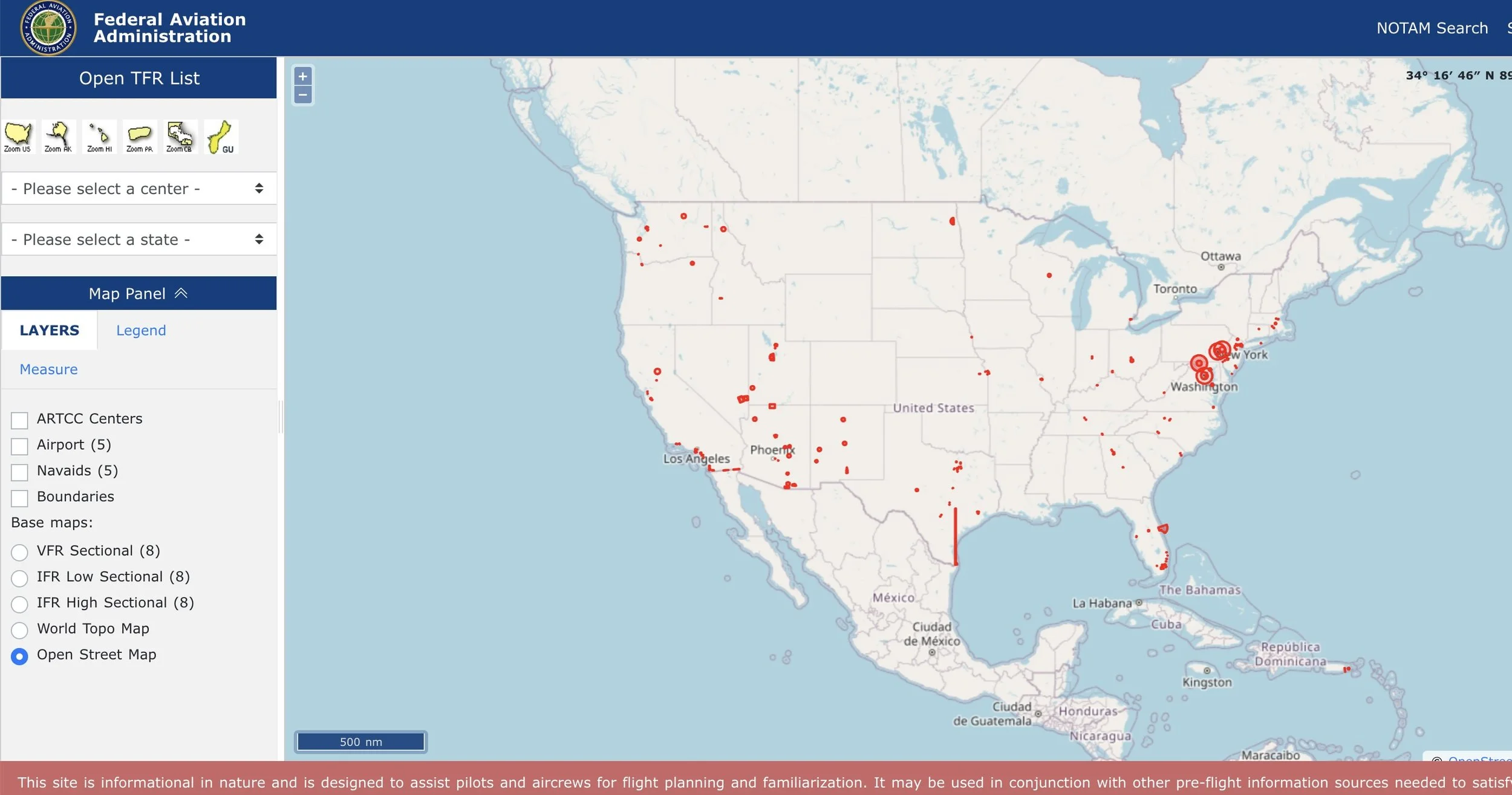
FAA TFR MAP
If you have tried to fly a drone over downtown Nashville this summer, you have probably run into a wall you did not expect. A Temporary Flight Restriction has been sitting over parts of the city since June 1, and it is not scheduled to lift until July 20. For a drone services business, that is not a minor inconvenience. That is nearly two months of the calendar where some of our most valuable work, real estate listings, construction documentation, event coverage, and brand video, simply cannot happen the way it used to.
Here is what is actually going on, why it is happening, and what it means if you operate a drone commercially in or near a city affected by the 2026 FIFA World Cup.
What Is a Temporary Flight Restriction, Exactly?
A Temporary Flight Restriction, or TFR, is a rule the FAA puts in place to block aircraft, including drones, from operating in a specific area of airspace for a limited time. TFRs show up for wildfires, presidential travel, major sporting events, and security operations. They are published through Notices to Airmen, or NOTAMs, and pilots are required to check for them before every flight. Most TFRs are short. A presidential visit might close airspace for a few hours. A stadium event might restrict the area for the duration of a game plus an hour on either side. What is happening with the World Cup is different. These restrictions are not measured in hours. They are measured in weeks, in some cases closer to two months.
The World Cup Has Turned Entire Cities Into No-Fly Zones
The FAA has designated all 2026 FIFA World Cup stadiums and related event spaces as No Drone Zones for the length of the tournament, which runs from June 11 through July 19. On match days, the restriction covers a three-nautical-mile radius around the stadium, up to 3,000 feet. Fan events carry their own one-nautical-mile, 1,000-foot restriction. Violating either one carries fines up to $75,000 per violation, criminal penalties that can reach a year in prison and a $100,000 fine, and permanent seizure of the aircraft.
That part, while disruptive, at least makes intuitive sense. Stadiums hosting actual matches need tighter security. What has caught many drone operators off guard is a second layer of restrictions tied to team base camps, the hotels and training facilities where national teams stay between matches, regardless of whether that city is hosting a single game. This is exactly the situation in Nashville.
Why Downtown Nashville Has a Nearly Two-Month TFR
Nashville is not hosting a World Cup match. There is no stadium here on FIFA's official host city list. And yet downtown Nashville has been under an active drone restriction since June 1, running through July 20, roughly seven weeks, because Japan's national team selected Nashville SC's facility as its base camp for the tournament.
The FAA's logic, as best we can tell, is that these base camp TFRs are treated as a security matter tied to the presence of the team itself, not the presence of a match. The restriction follows the team to wherever they are training and sleeping, not just to wherever they are playing. That has resulted in TFRs covering places far outside the 11 official U.S. host cities, including Boise, Louisville, and Sandy, Utah, cities with no World Cup matches at all but a team base camp nearby. For Nashville, that means a restriction is sitting over parts of downtown for the better part of two summer months, all because a soccer team based here for training is, in the FAA's framing, a "special security" concern.
We want to be careful about how we say this next part, because it is not really about soccer, and it is not about Japan specifically. It is about scale. A single team's training schedule, for a tournament Nashville is not even hosting, has resulted in a restriction that runs longer than most hurricane recovery TFRs. That is a strange outcome, and it deserves more scrutiny than it has gotten.
What This Means for Local Drone Businesses
We are not writing this from the sidelines. Nashville Drone Co has been directly affected by this TFR, and we suspect we are not alone.
Real estate listings do not pause because of a flight restriction. Neither does construction progress, and neither do the events our clients have already booked. When a property in the restricted zone needs aerial photography for a listing going live next week, or a construction site needs its scheduled progress documentation, a multi-week TFR does not just delay the shoot. It can cost the client the deal, the listing window, or the marketing moment they were counting on.
We have lost real, high-value opportunities during this window. Jobs that would have gone forward without a second thought in any other month of the year have instead gone to operators outside the restricted area, gotten pushed to ground-level photography as a fallback, or simply gotten canceled. For a small, local business, that is not an abstract inconvenience. That is real revenue that does not come back.
The Waiver Process Is Not a Practical Solution
The FAA does have a path for flying inside a TFR. It is called the Special Governmental Interest process, or SGI, built for a certified Part 107 pilot who needs authorization to operate inside restricted airspace for a legitimate purpose.
In theory, that should solve the problem. In practice, the SGI process is slow, document-heavy, and built around a level of operational detail most commercial drone jobs were not designed to produce on short notice. We have applied for waivers during this TFR window, and the experience has been genuinely difficult: extensive documentation requirements, long response times, and a process that does not seem designed with a small business's actual timeline in mind. A real estate listing that needs photography this week cannot wait on a request that may take days or weeks to resolve, if it resolves at all.
This is not a complaint about the existence of airspace security. Security around a national team's training facility is a reasonable goal. The complaint is about the mechanism. If the FAA is going to restrict commercial drone operators from a meaningful part of their livelihood for nearly two months, the path back into that airspace should be fast and clear. Right now, it is neither.
The FAA Needs to Rethink How These Waivers Work
This problem is bigger than one TFR in one city. The current waiver and authorization system was not built with a seven-week, recurring commercial impact in mind. It was built around occasional, short-duration disruptions: a presidential visit, a single game, a one-day event. The World Cup base camp TFRs have exposed a real gap. There is no fast, proportionate way for a legitimate, certified commercial operator to request limited, supervised access during an extended restriction like this one.
A simpler, faster review process, one matched to the actual length and recurring nature of these modern security TFRs, would let legitimate commercial operators keep working without compromising the security goals the restriction is meant to serve. Right now, the burden falls almost entirely on small operators with no real recourse beyond waiting it out.
We Have Reached Out to Our Representatives
Given the impact this has had on our business and others like it, we have contacted our elected representatives directly. Senator Marsha Blackburn and Representative Andy Ogles have both been made aware of the concern, and we understand they are raising the issue with the FAA on behalf of constituents affected by this restriction. We think that is the right next step, and we would encourage any other Middle Tennessee business dealing with the same problem to do the same. The more specific, documented impact the FAA hears about, lost jobs, missed listings, delayed construction documentation, the more likely this gets addressed before the next major event triggers the same outcome somewhere else.
What Drone Pilots and Businesses Should Do Right Now
If you are operating in or near a city with an active World Cup TFR, whether it is a host city or a base camp city like Nashville, a few practical steps matter right now.
Check NOTAMs before every flight, not just once at the start of the tournament. TFR boundaries and dates have shifted as FIFA's plans have changed, and the FAA updates them accordingly. The B4UFLY app and the FAA's TFR website are the most reliable places to confirm current restrictions before you launch.
If a job absolutely requires flying inside a restricted area, start the SGI waiver process as early as possible and be ready for a longer timeline than you would like. Build that into client expectations from the start of the conversation, not after a flight gets grounded.
For everything else, plan shoots just outside the restricted boundary where possible, or reschedule for after July 20 if the timeline allows it. It is not the answer anyone wants, but it is the realistic one until the restriction lifts.
And if this has affected your business the way it has affected ours, consider reaching out to your own representatives. This is the kind of problem that gets solved when enough people with real, specific impact say so.
The Bigger Picture
Nashville Drone Co supports reasonable airspace security. We are FAA Part 107 certified, fully insured, and we take the rules around restricted airspace seriously on every project. What we are pushing back on is not the idea of security, it is a process that treats a seven-week commercial shutdown the same way it treats a two-hour stadium restriction, with no faster path back to work for the legitimate operators caught in between.
We will keep flying where we are allowed to fly, keep applying for waivers where the work requires it, and keep documenting the impact this has had on our business and our clients. If you are dealing with the same thing, you are not imagining it, and you are not alone.
Have questions about how current TFRs might affect your upcoming project? Contact Nashville Drone Co and we will help you plan around it.