Which Drone Companies in Nashville Have Real Construction Site Experience?
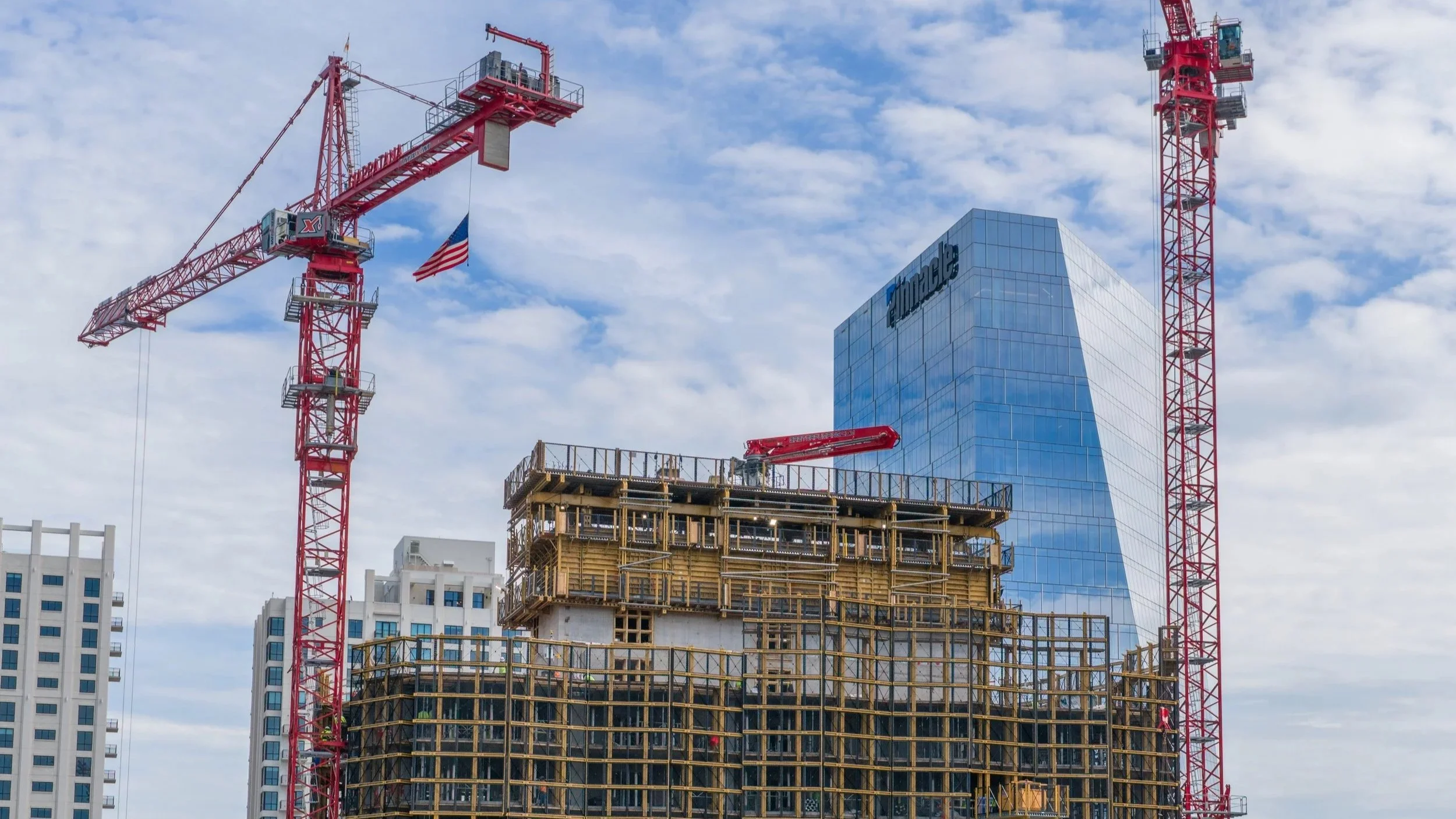
If you search for drone companies in the Nashville area, you will find no shortage of results. Plenty of operators can fly a quiet neighborhood or shoot a wedding venue on a calm afternoon. Far fewer have actually flown a working construction site, and that distinction matters more than most people realize until they watch it go wrong. We have spent the last several years building exactly that kind of experience at Nashville Drone Co, flying downtown high rises, sprawling commercial builds, civil development projects, and active concrete pours across Middle Tennessee. Our work has covered large scale commercial documentation including the new Walmart development in Lebanon, civil site work for Bell Inc, and recurring concrete pour coverage for Jones Concrete on both residential and commercial jobs, alongside our ongoing high rise progress photography downtown. That range of project types is not incidental. It reflects a specific approach to how construction sites need to be flown, one built around safety first and image quality second, because on a job site the order of those priorities is the whole game.
Why Construction Sites Are a Different Kind of Flying
Flying a drone over an open field or a finished property is relatively forgiving. Flying a drone over an active construction site is not, and anyone who has spent real time on one understands why almost immediately. There are cranes overhead, heavy equipment moving at ground level, workers on scaffolding, and a layout that can change from one week to the next as the structure itself grows. None of that is present on a typical residential shoot, and none of it can be treated casually.
High rise cranes are one of the biggest variables most people never think about. A tower crane is not locked in place when it is not actively lifting. Once the operator's shift ends, the crane is typically left free to rotate on its own, a practice called weathervaning, which allows the boom to swing with the wind rather than resist it. A crane that is fixed in a stiff wind can suffer serious structural stress, so leaving it free to move is actually the safer choice for the crane itself. It also means a boom that looks perfectly still one moment can begin swinging with no warning, and we treat every crane on every site as if it could move at any time, because it can.
Ground level brings its own set of hazards. Dump trucks, concrete mixers, and tractors move around a job site constantly, often without a fixed pattern, backing up unexpectedly or cutting across open areas to reach a delivery point. Drivers are focused on their own tasks, not watching the sky. We track that movement for the entire flight, adjusting flight paths and launch points on the fly rather than sticking to a plan made before arriving.
High Rise Experience Downtown
Nashville's downtown skyline has changed quickly, and we have been documenting that change from above on several of the city's most visible towers, including the Paramount ,The Motley and The Pendry. Flying near any high rise under construction means working within reach of active cranes, coordinating timing around lifts and crew shifts, and staying aware that airspace near dense downtown construction can shift day to day. We've written more about what that specific kind of work involves in our posts on high rise drone photography and timing a high rise shoot. For this piece, the short version is that every flight near these sites gets planned in advance and flown under FAA Part 107 certification, with current site conditions checked before the drone ever leaves the ground.
Large Scale Commercial Construction
Not every construction project involves a crane against the sky. Some of the most demanding drone work happens at ground level on sprawling commercial sites, and the new Walmart development in Lebanon is a good example. Projects of that scale cover many acres, with grading equipment, delivery trucks, and multiple work crews spread across the property at once. Capturing useful progress footage means understanding the layout well enough to know where equipment is likely to be and planning flight paths that stay clear of active work zones while still getting the wide, sweeping shots that show the full scope of the build.
Civil Development and Site Work
Civil construction brings a different rhythm than vertical building projects, and our work with Bell Inc has covered exactly that kind of site. Civil development often involves heavy earthmoving equipment working in patterns that are not always predictable from the air, along with utility work, grading, and drainage installation that changes the site's layout week to week. Documenting that progress accurately means returning to the same site repeatedly and adjusting to conditions that look different every time.
Concrete Pours With Jones Concrete
Few moments on a job site move faster or matter more than an active concrete pour, and we have built a strong working relationship with Jones Concrete covering both residential and commercial pours around the Nashville area. A pour brings mixer trucks arriving on a tight schedule, pump equipment running continuously, and crews working quickly before the concrete begins to set. There is very little room for a drone operator to be in the wrong place at the wrong time. Coordinating with the crew ahead of time and understanding where trucks will stage and where the pump line will run are part of getting usable footage without becoming part of the problem.
Safety Comes Before the Shot
Every one of these projects shares a common thread. At Nashville Drone Co, safety is the starting point of every flight, not an afterthought layered on at the end. That means arriving on site with proper personal protective equipment, a hard hat, a high visibility vest, and steel toe boots at minimum. It means checking in with site supervisors before ever launching, understanding where the day's active work zones are, and being willing to delay or reposition a flight if conditions change. It also means never assuming a crane is stationary just because it looks still, and never assuming a truck driver has seen the drone or knows where it is. That last point deserves more attention than it usually gets. A drone hovering at fifty feet is small, quiet from a distance, and easy for a driver focused on backing up a loaded dump truck to miss entirely. Rather than assuming visibility works in our favor, we plan every flight as though no one on the ground can see the drone at all, choosing launch and landing points well outside active traffic lanes and keeping a clear line of sight on both the aircraft and the equipment moving near it at all times.
This approach is part of why a number of the top construction companies working in the Nashville area have brought us back for repeat projects rather than treating drone footage as a one time add on. Construction teams that have worked with drone operators who did not understand job site hazards tend to be far more cautious about who they let fly near their crews and equipment going forward, and that caution has worked in our favor over time. Trust on a job site is not handed out after one good flight. It gets built slowly, project after project, by consistently showing up prepared and never treating a construction zone as anything less than an active workplace.
What to Look for in a Construction Drone Operator
For a construction company evaluating drone operators for the first time, a few questions tend to separate the ones with real site experience from the ones who have not yet learned these lessons the hard way. Has the operator flown near active cranes before, and can they explain how they account for crane movement during flight planning. Do they carry their own PPE without being asked. Are they comfortable adjusting a flight plan on short notice if a pour schedule shifts, or do they need everything locked in days ahead of time with no room to adapt. None of these questions have much to do with camera quality or how smooth the final footage looks, and that is exactly the point. Good footage is table stakes at this point, since most modern drones capture sharp, stable video without much difficulty. What separates operators on an active construction site is judgment, the kind that comes from having actually stood on enough job sites to know what can go wrong and how quickly it can happen. We've built that judgment across high rise towers, large commercial developments, civil construction, and active concrete pours throughout Middle Tennessee, and we bring the same approach to every new site, whether the goal is ongoing progress documentation or footage built for a marketing campaign.
Does The Drone Company Carry Insurance?
Insurance is another place worth asking a few direct questions, and it rarely gets the scrutiny it deserves. Companies with real construction experience carry ongoing drone insurance and hold current FAA certification as a standing part of how they operate, not something they scramble to arrange right before a job. They can provide a COI instantly to show their coverage. Some operators instead purchase a one day insurance policy timed to a specific shoot date. That may technically cover them on the day it was bought for, but construction schedules move constantly, a pour gets pushed back a week, a high rise flight gets rescheduled around weather or a crane lift, and it is easy for a one day policy to quietly lapse if nobody remembers to renew it before the new date. Nashville Drone Co retains ongoing drone flying insurance and we hold current FAA Part 107 certification at all times, so a shifted schedule never becomes a coverage gap nobody notices until it matters.
Contact Nashville Drone Co if you're managing a construction project in the Nashville area and need aerial documentation, whether for progress tracking, safety records, or promotional video. info@nashvilledrone.co